
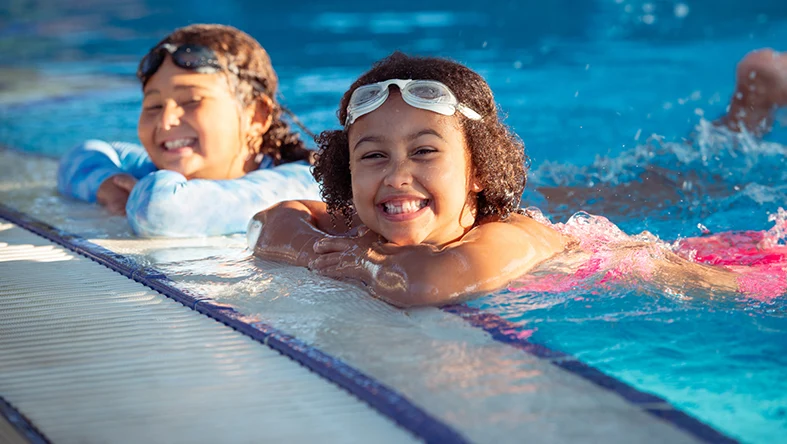
A few safe choices by the water could mean more summers with the people you love.
Summer is one of the best times to enjoy nature and your community in Washington state. We have many lakes, rivers, beaches, and public pools to enjoy on sunny days.
Sadly, every summer, water accidents and deadly drownings happen across the state. Whether you’re swimming, floating, paddling, or hanging out at a beach, having the tools to stay safe near water is important for everyone.
Here are 7 water safety tips and reminders:
1. Know the signs of drowning and what to do.
Drowning in movies looks like yelling and splashing. But in real life, drowning is often quick and quiet.
Knowing what to look for and what to do could save a life.
Watch for these signs of drowning:
- Head low in the water with mouth at water level.
- Gasping, silent face, or glassy eyes.
- Body straight up and down with little or no kicking.
- Arms flapping or pressing down at the sides, not waving for help.
- Not moving toward the shore or edge of the pool.
Would you know what to do if you pulled someone out of the water and they were not breathing? CPR (cardiopulmonary resuscitation) is a great tool that anyone can learn.

2. Wear a life jacket.
Life jackets lower the risk of drowning for everyone, all ages and swimming abilities. If you don’t have your own life jacket, there are ways to borrow them at no cost. Try these programs in Washington state:
- Washington State Life Jacket Loaner Map
- Life Jacket Loaner Program – National Drowning Prevention Alliance
- Marinas, boat launches, and State parks: Washington State Parks: Life Jacket Loaner Program

3. Watch children closely.
Accidents can happen in seconds. When there’s water nearby, a trusted adult needs to be watching at all times. For kids under 5, stay close enough that you can pull them out of the water in seconds.
4. Enjoy your local pool or splash pad.
Pools and splash pads can be the safest places to cool off or swim on a hot day. Local health departments inspect pools and splash pads routinely to help keep them clean and safe.
Check your city’s Parks & Recreation website to find pools and splash pads near you.
5. Be aware of cold water even on warm days.
When the weather warms up in Washington state, many lakes, rivers, and streams can be cold and fast-moving from melting mountain snow.
In open water, it is very important to wear a life jacket, even for a strong swimmer.
Here’s why:
- If you jump into really cold water or fall in by accident, you can get “cold water shock.” When you first enter the water, you might have trouble breathing, feel dizzy, or start to panic. It can become hard to swim or move, even for strong swimmers.
- After 30 minutes in really cold water, hypothermia (low body temperature) can start which can also be deadly. This happens when your body loses heat faster than it can make it.
If you think you or someone you are swimming with has hypothermia call 911 immediately. Even if after exiting the water, medical attention is important to re-warm the body safely.
6. Avoid drinking alcohol and using cannabis when swimming or boating.
Alcohol, cannabis, and other substances can hurt our reaction time, attention, and judgment. It’s safest to be alert and clear-headed when near water, especially if you are with children.
7. Learn basic swimming and water safety skills.
Swim lessons early and often teach children the skills needed to stay safe while enjoying the water. Adults can take swimming lessons, too!
Try an indoor pool in the winter when lessons are easier to schedule, so you are ready in the summer.
How many swim safe tips do you already practice? Did you find any new ones you will try?
As you plan your next water adventure, remember the best way to end a fun day in the water is to get home safely.
Resources
- Cold water shock: What it is and how to protect yourself from Washington State Parks
- Water Safety for Lakes, Rivers, and Beaches from the Washington State Department of Health.
- Water Safety and Swimming from the YMCA.